THE NATURE OF ACCIDENTS

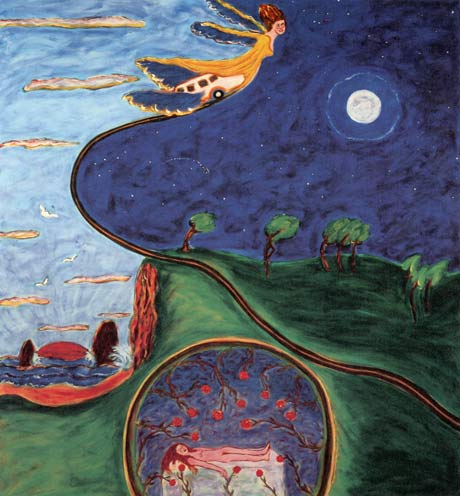
th  What do we make of accidents that befall us? Harrison Ford’s plane lies, mortally wounded, on the lawn of a local golf course after being skillfully landed by the experienced pilot. Accidents happen to the best of us as well as to the average Jane and Joe – no one escapes. Accidents, both large and small, are part of everyone’s life at some point.

Planes fall from the sky, just as relationships sometimes do. A person’s health can take a dramatic nosedive, or one’s bank account is critically depleted, the stock market takes a sudden tumble, or a career on the way up takes an unexpected turn downward – sometimes from out of the blue. These experiences often happen without any warning at all. Being wise and being smart and being careful do not seem to provide ultimate insurance against those things that can literally or figuratively drop right out of the sky.

Are accidents random? Maybe. Do they have meaning? Possibly. It’s always somewhat subjective whether we say that everything happens for a reason or not. Was it pilot error or a mechanical failure, or was it an “act of God?” Is an illness recently diagnosed the result of unhealthy behavior or a mutated gene gone haywire? When a relationship we really cared about goes south, despite our best efforts, is it something I did, consciously or unconsciously? Or is it just bad luck?

These questions have no absolute answers. If they did, someone would write a book about it, and it would be the final word – we would all rush out to purchase it in a flash while the author retired richer than a small country to a secluded island in the Caribbean. But so far, that book has not been written. And so we are left with our own subjective answers in order to find meaning when life goes awry.

It is, however, worth the effort usually to take a philosophical approach towards accidents that befall us. There is ample documentation in the narratives, the novels, and the religious accounts of those who have succeeded in transcending ruptures in their journeys. Buddhists tell us, for example, that suffering in life is not an option. Learning, however, to minimize one’s suffering certainly is optional through the practices of mindfulness, meditation, and the development of loving-kindness. A delightful poster depicts a bearded Yogi riding a surfboard on a huge ocean wave. The caption below states delightfully, “If you can’t stop the waves, at least learn how to ride them!”

Also, it is often the case, though not necessarily, that accidents that seem to throw up brick walls to our efforts at progressing through life may also may be timely detours toward hidden, yet-to-be-revealed rewards. Our vision in the moment of disruption is limited to the immediate scene: the loss, the pain, the brokenness, the hopelessness of our felt sense of demise. Only with 20-20 sight a year later or five or 10 years even, do we see that the brick wall was ultimately transformed into a portal of hope and success beyond our limited mental capacities at the time of said accident. I would not trade now, for example, an ounce of temporary promise for some or maybe all of the accidents that have happened in my life, as I review them through the rearview window of my mind. What seemed disastrous at the time eventually became a path hidden in a tangled forest that opened, slowly but surely, into unseen vistas of new life with time and with one other factor….

Consciousness. What seems to make the difference in whether an accident is an objective tragedy or a subjective experience of mystery and hope is what we refer to as consciousness — the capacity to see with the eyes of intuition and wisdom rather than the eyes of literal facts. Of course it helps to have each other in the midst of these times. Particularly is it useful to have the eyes and the ears and the compassion of wise mentors, life coaches, pastors, counselors, and shamans. They’ve been there. They have studied the sacred texts that address the realities of accidents and human pain and suffering. And they are always there to hold the beacons of hope as we wander, haltingly, towards a distant but sure light.

In Praise of Being Old

Live Oak TreeI am declaring publicly for the first time that I am unequivocally and unimpeachably old. I reject all those other words we use in order to step gingerly around the word “old.” Senior citizen, elder, representative of the golden years, etc. On my birthday, March 28th, I will be 62 years OLD – not 62 years young. I am old, and I love it!

The first time I taught Developmental Psychology, I came across the notion that, according to science, when we use the qualifier “old” in reference to something about ourselves (“I can’t remember that name – I must be getting old.”), we’re doing something that is very unhealthy. As the logic goes, our brains record hearing the word “old” used to describe our state of mental and physical being, which then speeds up a proverbial neurological domino effect that gradually wreaks havoc on us. The more we say the word “old,” the more we actually age ourselves — so it is said.

To this line of reasoning and so-called science, I now say “Horse-feathers!” The assumption is that our brains recognize the word “old” as a bad word, a toxin if you will. But it needn’t be so. Although in our culture, with its obsessive comparing of what is new to what is old, and with its contrasts of the glories of youthfulness to the pitfalls of old age, it is easy to see how we are already far down the road towards being brainwashed to believe “old = bad.”

Again, however, it needn’t be. Yes, at 62, I have more aches and pains than I once did. I have a new right hip and a left knee that may someday require replacement too. I seem to add one or two new supplements every other year or so to my daily regimen of vitamins and such. I now have sleep apnea and a cute little machine beside of my bed that helps keep my breathing steady and my wife satisfied that she can now get a good night’s sleep without the sound of my snoring. I’m old — what would one expect? Every time I go to a conference and reconnect with old friends, we spend about half of our time catching up on what new ailments our old bodies have developed. We’re like a group of grizzled survivors from the latest reality TV series!

Old is good, I say. I am the happiest I have ever been in my life. Most days I have a sense of contentment that is beyond words and, at times, beyond what logic would predict. I am more aware than ever of the sadness and sorrow of life lived in this world and of the sorry state of affairs in many corners of my country and our world, and I find myself checking the obituaries more frequently than ever before. And yet I celebrate being old. I celebrate simple pleasures like walking my dog and making a pot of yummy soup on a Sunday afternoon. I celebrate learning more and more to appreciate opportunities to just “be,” rather than running pell-mell towards new things to do or accomplish. I have a vocation that makes my daytime activity satisfying and meaningful, friends and family about whom I care deeply, and I have a loving wife with whom I can share both laughter and tears, good movies and good food, and a rhythm of togetherness and being separate that feels right and healthy and harmonious.

Old is good, I now know, though the world has been trying to get me to avoid using this word for a long-time now. Give me the senior discounts, and yes open the door for me if you see me struggling a bit. Bring me the best medicine healthcare and insurance can provide — not to keep me from death’s door, but in order to give me every second and every breath and every moment of gratitude that I can enjoy. For I no longer laugh in the face of the word “old,” as if I could thus keep old age at bay. I laugh, instead, to be old and to make old age a good, and true, and faithful friend. And most days, I find life as an old person to be an unbelievably amazing and wonderful mystery. I can almost not believe that I have been allowed to live in it’s autumnal glory.

Where I Have Been

Darkness    In darkness and in light we are made.

But first, there was darkness before the wind of God’s spirit brought light. And each night, we are reminded that darkness is as much a part of life as is the light of our daytime lives. We receive equal doses of both.

So, I have been in darkness these past 12 months since my last posting: a period of gestation, of soul-searching, of existential wrestling with unseen angels. There has been light too; but in my soon to be sixty-second year, I am learning to treat darkness with more respect, and at times, I can even befriend the dark.

As children, we loved a “camp-out” under the stars. Just a few yards beyond our own backyard, we took our sleeping bags and flashlights, our comic books and playing cards, and loved the night. We loved the stars above and the stories we read in the night sky, it’s images and characters imagined as real, and the games we played in the night. With darkness, we felt a sense of freedom, a taste of trust in the natural world, and a certain camaraderie with our childhood buddies and friends.

When darkness comes unbidden — through some present suffering, or illness, or of simply feeling lost in the middle of our forward progress — it’s not such a chummy sensation. It may feel more like shame or guilt or disorientation. We want a way out, but feel stymied. Much like the time when I considered the possibility of divorce: I could not find a way up and out towards the light, so I decided the only logical alternative was the way down, deeper into the darkness. And that was how I found hope.

We are fascinated with darkness, and we fear it too. In Jung’s way of thinking, darkness is archetypal. Darkness is a spiritual reality that manifests throughout our lives in nature, in our relationships, and in our souls. Our efforts to get rid of our personal times of darkness usually result in making things worse. But if we get the hang of it — lighting a candle in the dark, inviting a trusted friend, or just waiting for the lesson our souls need — the darkness gives us gifts we otherwise would miss and be the poorer for missing such blessed offerings.

I have a new office, a new stage in my career as a therapist of soul, a new community, and a new home I share with my wife, Sarah, and dog, Theo. It’s a very good thing. Without the darkness, however, I never would have known what my soul was drawing me towards.

THE ROAD

All is darkness
And distant drumming,
Walking along slowly
With shadows only as guides.
How is it that I am here?
Where am I going?
How can a dark road feel so much like –
Home.

Dark faces move
Zombie-like.
Do they mean me harm?
Are they really parts of me?
Or am I actually their creation?
From somewhere I feel a dare:
Join hands with these Others.
Jesus! These least of these?
Couldn’t I, instead, just run?

Come now.
We can do this.
In larger numbers we’ll go.
Courage!
The drumming growing louder.
Fire!
And Dancing!
And singing –
See it now!

A wrong road made
Right
By love and grace
And risk.
We howl our tender mercies
As we claim their new light.
Roads that seemed right go
Wrong
When we forget to celebrate faces in the
Night.

by John B. Rowe

Healing and Dreams

Healing-DreamWhat is the connection between dreams and healing? Do you have a story about this? And if so, would you share it for the benefit of others. This topic is a current research interest of mine, so your experience may be exactly what someone else needs.

Here’s a recent experience of my own, which I take to be an experience of healing. I’m a bit agnostic about this kind of thing, because I’m just beginning to develop language and concepts that make some intuitive sense. Like a lot of spiritual things, though, it’s just hard to prove. So here’s the story.

I’ve recently been having trouble with an arthritic knee. The doctor says it needs to be replaced someday, which is quite popular for men and women in my age bracket. Pop the old joint out and in with the new! OK, I say, but privately I wondered if there might be another way.

So, I believe in the power of “three.” If an idea or a thought or a solution comes my way once, I’m interested but never act on it. If the same thing occurs twice, then it definitely has my attention, but then I wait. And if a third “coincidental” idea occurs, I take it as something I need to pursue. With my knee issue, this happened in the following way: 1) A friend suggested acupuncture; 2) one of my psychotherapy clients reported success working with a specific acupuncturist locally; and 3) a dream came to me in which the core image was one of unconventional healing taking place — not on a knee specifically, but unconventional healing was the theme. I figured I should take notice and act!

Well, I went to see the acupuncturist to whom I was recommended. We have been working together now for about 6 weeks and 10 sessions. And today, I can say that it feels like a “miracle.” Now I believe miracles are the result of natural law that we don’t fully comprehend yet. I have 80-90% less pain and inflammation than I had when I began working with the acupuncturist, but I’m still a bit agnostic — who knows how long this will last. Who knows if this is what is considered to be spiritual healing or healing from God? But I believe it is.

I like Carl Jung’s definition of God.

To this day “God” is the name by which I designate all things which cross my willful path violently and recklessly, all things which upset my subjective views, plans and intentions, and change the course of my life for better or for worse.”

God can only reach us when we let down our ego perspectives long enough to be caught, wooed, or seduced by God. And until proven otherwise, I choose to believe that between a friend, a client’s off-hand recommendation, and an image of healing from one of my dreams, God is working to ease my pain.

How about you? How to you view healing, dreams, and the work of God on body and soul?

Amen

Meteors at Christmas

mars_meteors3_pr     It is nighttime, and I am standing in an open field with others as I catch a glimpse, from the corner of my eye, of a bright stream of light in the eastern sky. I turn to face the light, while I watch in amazement as it expands and approaches at tremendous speed. More bright lights, meteors, follow, and they pass over us creating a sense of awe and terror at the same time. I look back to the east and see more meteors hurtling towards the distant horizon. These meteors, for certain, are headed for earth where they will create untold destruction.

Meteors may represent those split-off, forgotten, or barely conscious parts of the Self that wander aimlessly within the inner cosmos of every soul. Once part of our original wholeness, their beauty and their capacity for creating terror and destruction are equal. So,  when they suddenly appear, there is a sense of awe in the face of their numinous presence. Just as God is described as both ultimate beauty and love as well as something to fear (“The fear of God is the beginning of wisdom….”), meteors may represent what it is like when forgotten aspects of soul make their unexpected appearances. Whether our awareness of these eruptions into consciousness creates a moment of beauty and wonder or a moment of helplessness and fear is maybe a matter of how mindful we are. Can we slow down, look at them, journal, imagine, or integrate them through dreamwork or conversation with a trusted friend, partner, or counselor?

Christmas, also, is marked by the appearance of a Great Light in the eastern sky. On the one hand, the spectacle of a Star awakens us to something spiritual, while on the other hand, the birth of an infant to a young woman and her baffled husband in a humble stable creates a sense of wonder in the midst of something so simple and earthy. The Spirit and the simplicity of the Christmas story hover together in balance — heaven coming to earth offering hope for the world. Who would have imagined that something so small could create such a stir, such great expectations, and offer such a welcome opportunity for healing the suffering of all?

Jesus lived the life of wholeness, and he shows us a way for us to follow. If this child could talk, would he not say to us, “Individuation is possible!” We can progress towards wholeness when we follow his wisdom, his humility, his capacity to bear suffering, offer unconditional love, and resist the tendency to keep God’s grace at arms length. Instead of rejecting those who are different from us, we can, through God’s loving grace, use differences to work on reclaiming parts of our selves. Of course, this isn’t easy. When forgotten parts of ourselves make sudden appearances, like meteors, we know too well how they can create havoc in our souls or in our relationships.

We all have the capacity for self-destructiveness and inflicting damage on Mother Earth through our selfishness and neglect. But Jesus shows us, too, our Original Goodness — the Light that is in us and among us that can create lives of beauty and healing. The least we can do at Christmas is stand in awe at the Sacredness of this time, the Sacredness of our own souls, and the challenge to be conscious of the Light that God gives us. Listen to the music, wonder at the stars, love with simplicity and grace, speak words of kindness, pray for the healing of Mother Earth, and honor the parts of soul that seek remembrance with hospitality, humility, and grace. In the words of Mary, “Let it be, Lord, unto me, according to Thy will….”

Amen

Pool Rules for the Soul to

Swimming Pool

A swimming pool is an apt image for the unconscious. Bodies of water, whether an ocean, lake, river, or swimming pool connote the depths of life and of soul. A swimming pool, more specifically, is a place for relaxation and for play. But there are also rules.

In a recent dream, my dream ego plays the part of a lifeguard. It makes some sense that I would be in this role. In my professional life, I am a therapist, a kind of guardian of souls. As a lifeguard in my teen years, one of the not-so-fun, but necessary, jobs was to maintain and to enforce the rules:

  • No running
  • No horseplay in the pool
  • No food or drink in the pool area
  • Always stay with your buddy

It’s the pool rules that actually ensure that everyone has a good time and stays safe. Breaking the rules and ignoring respect for the dangers of water can ruin what should be a wonderful experience.

In my dream, one little boy whom I have just disciplined, walks off defiantly. He refuses to sit out with others who broke the rules, and as he walks away, I warn him to never come back. Of course, psychologically, we know he will return, because that is the way repression works — the unconscious forgets nothing, and whatever is repressed is sure to return in one form or another. Bad habits, compulsive behaviors, uncomfortable feelings, unresolved childhood issues, and the like, have a habit of laying low temporarily, only to return when we least expect it.

“No running” is one of the best pool rules for the soul. Imaged by the Greeks as a “butterfly,” the soul is a beautiful, wistful, mysterious, and fragile thing. We approach the soul respectfully, honoring her need for tending. So, we slow down our hurried pace, take time to write in our dream journals, sit with images until they tell their tale, and share with dream friends our inner stirrings of the night. This way of working around and with the unconscious depths is what makes dreamwork so rewarding and useful.

“No horseplay” is another essential rule. Swimming pools are a source of enormous fun and relaxation. As a lifeguard, though, I recall the few times when I had to race to someone’s rescue. Playing too rough, splashing an unsuspecting swimmer with a mouthful of water, or diving off of the high dive without proper instruction or skill or assistance can result in disaster. Likewise, working with the unconscious deserves our respect. The source of nightmares, at times, dreams can either make us dread it’s nighttime visions, or with proper training and skills, nightmares can open us to opportunities for healing and wholeness. Carl Jung developed sensible and effective rules for working with dreams — rules that pay off when applied with diligence and sensitivity and knowledge.

“Always stay with your buddy,” is another essential rule for working with the unconscious. When we work with dreams in the context of an active dreamwork group, or with a friend or partner, a pastor sensitive to the individuation journey, or a skilled therapist, the riches of dreams become more readily apparent. Not that anyone else can tell us exactly what a dream means for us, but by listening to insights and reflections from others, the ego softens its tight hold, and we can better listen and see what our souls want and need.

Someday, I hope to reconnect with the defiant little boy who walked away — a shadow image part of me, no doubt — to see what he needs from me. For now, he has to obey the rules, just like everyone else. I know he will be back, and when he does, I’ll still be there to welcome him along with all the others swimming in the depths of my soul.

Amen

Alec Baldwin and the Alien Abductors

planetearth     I am in a spaceship — a very modern facility. A man that looks like Alec Baldwin approaches me, and he seems very anxious and earnest about telling me something. In  my mind’s eye, I see a very slick, glossy full-page pharaceutical add for a vitamin supplement that he is promoting. Alec Baldwin tells me that I have to get it, and he’s very insistent. I tell him I’m already taking 7 or 8 supplements as it is. Does he really think I need another? He just becomes even more insistent that I take this new supplement. Then, a sleek, white automobile pulls up outside, and Alec Baldwin, resisting helplessly, is abducted by aliens from outer space.

Paying attention to the images in our dreams has a lot to do with seeing what is missing in our conscious attitudes. Since outward behavior always follows inner feeling and attitude, we need this kind of psychic compass to re-align our lives when we get out of balance, which we often do.

For example, my association to being in a “spaceship” in a recent dream is that my inward nature is calling my ego to return to Mother Earth. This dream image is showing me that space travel, while adventurous and fascinating, can also never replace the experience of living a grounded, more earthy life. Life in its original form is rooted in nature, fresh air and sunshine, touching the ground of one’s existence, and moving much more slowly to the rhythms of our physical and spiritual natures: seeing, hearing, touching, smelling, and tasting the stuff of life.

Consciously, I am in “space travel” whenever life in the world is speeding ahead at warp-speed. Life can be full of good and meaningful things, but life is not meant to be lived at this speed constantly. We can develop “jet lag of the soul” whenever we become overinvested in too much activity, too many meetings, too much energy spent in the world of intellect and ideas and service, and not enough connection to a pace of life that feeds our souls. Our health depends on some kind of psychic and natural balance.

Alec Baldwin symbolizes, for me, the solution offered by our technological, space-age world for the soul’s jet-lag: pre-packaged, branded, techno-health and healing. If we can buy health in the form of a pill, maybe we can keep up the harried pace of our lives and fool ourselves into thinking that this won’t come back to haunt us. We substitute this “junk-food-for-the-soul” for the real thing. Rather than eating my vegetables and fruit and lean protein, I start reaching for the fast-food and the luscious, sugary pastry treats, or one more glass of wine that may get me through the moment, but leave me feeling too-soon empty and hungry once again.

A “God-squad” of alien abductors arrives in a sleek, white car to haul Alec Baldwin away. They seem to know that I am vulnerable to this temptation to reach for the quick fix. As I work with this strange dream, I eventually realize that I am overdue for a return to Mother Earth, the planet that sustains me. I’ve missed my regular exercise, having opted to work a little more than usual; but also sacrificing my connection to nature — both outward nature and the nature of my natural needs. I long for the feeling of my heart pumping quickly with beads of sweat forming on my forehead, and the sensation of sunshine and wind against my face on an afternoon bicycle ride; or just the soul-filled sensation of enjoying a leisurely home-cooked meal and a relaxing conversation with my wife about things that can make us either laugh or cry.

I long for this return from the airy heights of accomplishing goals in the outer world to the fresh air and sunshine of a life lived more in the moment. I will continue to rely on my daily dose of vitamin supplements for a portion of my health. But Mother Earth is calling me to return to the sustenance that makes life full and vital and rich in relationships and meaning.

Amen

Dreamwork: A GPS System for the Soul

Monarch ButterflyWhy do dreamwork? One could certainly do other valuable things in the early morning rather than spending time writing down dreams and images from the night before. Sipping morning tea or coffee, reading the paper, working out, reading devotions, or just getting ready to meet the day — all worthy activities. So why do dreamwork?

The answer, for me, is that there really isn’t any universal reason that one should do dreamwork. Dreams are interesting, entertaining, and, according to some dream researchers, dreams accomplish necessary functions regardless of whether we attend to them or not. Apparently, dreams help to integrate memories, thoughts, and emotions important for our survival. In fact, if we are prevented from REM sleep and thus dreaming, we will begin to hallucinate in waking life! Some dream researchers even claim that dreams, left unattended, still serve as a kind of “unconscious psychoanalysis” that works nightly to keep us in balance.

So, there needs to be some compelling reason for doing dreamwork, a reason that addresses a felt need on the part of the dreamer. A reason such as a desire to understand relational difficulties that seem to repeat themselves, despite our best efforts to change. Or one might want to better understand what vocation or career one is being called to. Or you might be confronted with the challenges of parenting or of aging, or some other life transition.

A common reason people give for doing dreamwork is that they desire to grow spiritually — knowing that our ego-centric lives, by definition, ultimately defend us against the authentic stirrings of our souls. When people feel that there is “something missing,” dreamwork is something they turn to in order to discover what their egos are unable to find.

This is the perspective of Jung’s view of the ego-Self axis.

ego self axis

As we go through life, we typically shift from being united with our deeper selves to gradually becoming more and more alienated from the Self, the God-image (imago dei) that is unique to each individual. So the question is a good one: “How do I stay in-tune with my own soul? How do I open up to God’s guidance in my life?”

Most forms of spiritual discipline do not help with this process of experiencing in a deeply felt way God’s guidance for one’s life. Prayer, Worship, Bible Study, doing acts of charity — all of these tend to rely on conscious behavioral practices. They do not deal with the unconscious, where the God-image or Self resides. While other spiritual practices, such as Centering or Contemplative Prayer, Lectio Divina, Walking the Labrynth, and Meditation do provide ways of setting consciousness aside in order to provide for a more immediate experience of the Sacred or the Holy.

Dreamwork enables a person to go more directly and consciously to the Source — the GPS system inside of us that God has so wonderfully designed for our guidance through life. Just as the Monarch Butterfly (See Flight of the Butterflies at IMAX) “knows” precisely how to travel over 2500 miles, not to a country or a county or a city or a town, but to a specific mountain peak where it has never been before, so we can find our way through the challenges, the storms, and the uncertainties of life to fulfill God’s plan for us by paying close attention to our dreams.

Of course, it involves taking time to write our dreams down, learning how to interpret our dreams, either alone or preferrably in a group. Also, reading deeply and widely in Jungian psychology is a must, it seems to me. It may take years to learn well the symbolic language of archetypes and one’s own personal symbol-world. But the opportunity to live one’s life feeling “fully alive,” deeply in touch with the same energy that formed the stars, the planets, the incredible diversity of Mother Earth, as well as the chance to make a unique difference in this world — for those willing to travel this journey, what a remarkable privilege!

Amen

Dreamwork: Training the Inner Puppy

puppy“I have a new, blond puppy. She is adorable! I place her gently on the floor, and she very quickly makes her first, tiny poop. She looks proud of herself, and so am I. But now comes the training. I try to make sure to remember that she needs to be taken outside relatively frequently so that she learns where to do her business — I don’t want my cute new friend to become a nuisance because she soils and spoils my home. It’s her new home too. But this training thing is exhausting!”

****************

As I worked with this recent dream, it occurred to me what an excellent image it is for the challenge and the benefit of doing dreamwork — or soulwork, for that matter.

Every morning is actually an opportunity for something “new” to be discovered. The unconscious offers up something for the ego to either discover for the first time, or it offers something that we may have forgotten; so it needs to be rediscovered by the ego and, thereby, integrated into consciousness. But it does take discipline.

In his book, A Spirituality of Living, Henri Nouwen says this about the importance of discipline: “If we want to be disciples of Jesus, we have to live a disciplined life,” Nouwen asserts. “In the spiritual life, discipline requires conscious effort to keep every area in life from being filled up. It means creating space in our life for God to act and speak.”

When we get up in the morning, we may remember a dream from the night before. If it’s message for us is not to fall back into unconsciousness, we then need to make space to both write the dream down in our dream journals, while also creating enough space at some point in our busy days to actually do the work — to go back into the dream to listen to the images and symbols and associations that reverberate in our souls as they seek a place in our lives and in our relationships with God and with others.

The “inner puppy” in my dream has some “good shit” (sorry — I just couldn’t find a better metaphor). But if our own instinctual energies are to be creatively channelled, rather than spoiling our lives through impulsive or compulsive behaviors, we need to literally “train” these instinctual energies — loveable and warm and cuddly and adorable as puppies can be, they can either ruin a home or make it a wonderful place to be. It’s all in the relationship between master and young puppy.

When Sam, my rescue dog, came into my home, he was 7 years old and housebroken. But I took time to read and to learn more about dog psychology. We spent hours and hours alone together, usually an hour in the morning and an hour in the evening. During this time, I gave up some things I cherished, such as riding by bicycle and that second cup of coffee, because I felt like this time between me and Sam would shape the rest of our lives together and enhance the joy of dog ownership. So, I placed a bag of hot dog bites in a plastic baggy, as Sam and I headed out into whatever weather visited us each day. Rain or shine, warm or cold, off we would go. During our routine, at least 20 minutes was devoted to training Sam in the usual exercises: sit, stay, lay down, and come. Work was slow, but oh so rewarding. Sam loved the hot dogs, of course; but I perceived that we both felt the warm, glad glow of a relationship that gave our lives deepened meaning and purpose.

I can’t think of a better image than this intimate relationship between master and dog for the joys and amazing inner journey of dreamwork. Yes, discipline is involved. We create space for our dreams and for the work it takes to notice our paths of individuation. And this work pays off, in small and great ways, as we feel more and more alive and as we notice the subtle hand of God shaping us and guiding our lives.

Amen

Unlock the Meaning in Your Dreams: Program Helps People Connect to God

John RoweRev. Dr. John Rowe will lead an introductory workshop called “Dreamwork: God’s Forgotten Language” 7-9 p.m. Jan. 24 at the Davidson UMC Chapel, 233 S. Main St., Davidson. The workshop is free and open to everyone, and participants who want to learn more about Dreamwork can enroll in an eight-week study course and join a new Dreamwork small group that will being after the course. To register for the workshop or for information, call the Davidson UMC Counseling Center at 704-892-6135 or email to John Rowe at jrowe@davidsonumc.org. Child care is available if requested by Jan. 20. The idea that God speaks to people through dreams hearkens back to stories in the Bible’s Old Testament that were recorded thousands of years ago.

* * * * * * * * * * *

In the past decade, the practice of connecting with God through dreams has seen a renaissance, as more people have become interested in analyzing their dreams as a spiritual discipline.

“In the early church, dreams were considered to be one of the best ways that God was trying to tell you about your life,” said John Rowe, director of Davidson United Methodist Church’s counseling center.

For a year, Rowe has led a group of about nine people who meet twice a month to help each other find meaning in their dreams. He said that, within churches in the Southeast, he has seen a growing interest in dreams.

Connecting dreams and spirituality went out of vogue around the fifth century, when dreams became suspect as church leaders began preferring people to learn about God through the teaching of orthodox dogma and belief, Rowe said.

The practice revived in the early 1900s with Swiss psychotherapist Carl Jung’s theories of “individuation,” or the idea that people are born with an “authentic self” that people repress in favor of a “public face” they believe will be more acceptable to others.

Accessing dreams connects people with the authentic self in the subconscious, Rowe said, allowing them to understand essential aspects of themselves.

“People who are spiritual assume the authentic self can only come from God, and to know God is to know your authentic self deeply and (to know) the direction God is leading you in your life,” Rowe said.

Rowe’s small group was founded out of a workshop and a subsequent in-depth class that provided participants with tools to help each other interpret their dreams.

Each small group meeting begins with prayer or meditation. The facilitator will sometimes give a short talk or lecture, and then group members share details of recent dreams.

“We use techniques we’ve studied, and we begin working with the dream and give the dream back to the person at the end of our work to see what sort of insights they have from the Dreamwork,” Rowe said.

The group often works on three or four dreams each session. Usually, Rowe said, people find their dreams bewildering and can’t make sense of them.

“I’ve rarely heard of a dream that didn’t sound crazy,” Rowe said. “But as the group begins to work with the tools they’ve been taught to use, it’s incredible that something that can be so crazy-sounding can unfold in a deep and meaningful way for people.”

He encourages people to keep a journal, pen and flashlight by their bed to write down dreams, which often quickly are forgotten. The more people get in the practice of writing down dreams, often the better they remember them, he said.

Rowe said the Dreamwork group is devoted to meeting together, and friendships have formed as people have talked about their dreams and their lives.

“It really is a mixture of fun and is deeply meaningful,” Rowe said. “You can’t talk about a dream usually without a lot of laughter.”

Copyright 2013 . All rights reserved. This material may not be published, broadcast, rewritten or redistributed.

Marty Minchin is a freelance writer for Lake Norman News. Have a story idea for Marty? Email her at martyminchin@gmail.com.